An implantable cardioverter-defibrillator. It monitors for dangerously fast heart rhythms and can deliver a corrective shock if needed.
Understand ICD, CRT-P and CRT-D, who may benefit, shocks, recovery and follow-up. Discuss your options with Dr. Kulin Sheth in Bopal, Ahmedabad.
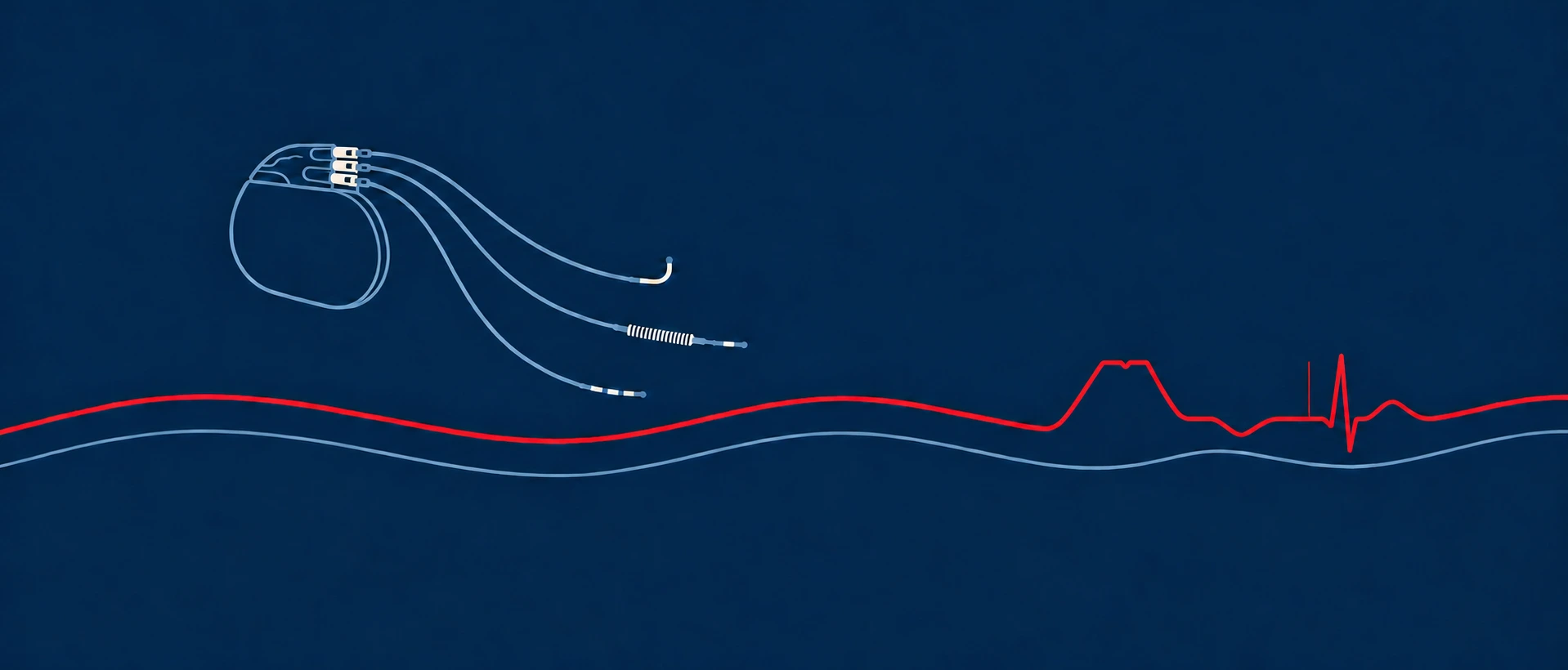
An automatic implantable cardioverter-defibrillator (AICD), commonly called an implantable cardioverter-defibrillator (ICD), is used to detect and treat certain life-threatening fast heart rhythms. If needed, it delivers an electrical shock to restore the rhythm.
Cardiac resynchronisation therapy with a pacemaker (CRT-P) helps a weak heart's lower pumping chambers squeeze together when they are beating out of step.
Cardiac resynchronisation therapy with a defibrillator (CRT-D) combines that coordinated pacing with protection against dangerous fast rhythms.
These devices have different purposes. The choice depends on whether you need rhythm protection, help coordinating the heart's pumping, or both.
| Device | How it helps | Does it give a shock? |
|---|---|---|
| Pacemaker | Stops the heartbeat from becoming too slow. | No |
| Implanted defibrillator (ICD) | Detects and treats certain life-threatening fast rhythms. | Yes, when needed |
| Resynchronisation pacemaker (CRT-P) | Helps the lower pumping chambers squeeze together. | No |
| Resynchronisation device with a defibrillator (CRT-D) | Helps coordinate pumping and treats dangerous fast rhythms. | Yes, when needed |
An ICD does not give a shock for every fast heartbeat. Depending on the rhythm and device, it may first use a short burst of pacing that you may not feel.
If your main problem is a slow heartbeat, the pacemaker page explains that treatment separately.
Dr. Kulin Sheth personally implants ICD, CRT-P and CRT-D devices at Apollo CVHF Hospital, Bodakdev, Ahmedabad. You can discuss your reports and treatment options with him at Sheth Heart Clinic, Bopal.
No. Many people with a weak heart are treated with medicines, without an implanted device.
“Heart weak chhe, etle pacemaker device jaruri chhe?”
The decision depends on why the heart is weak, your symptoms, an electrocardiogram (ECG), which records the heart's electrical activity, and an echocardiogram (echo), an ultrasound that assesses its pumping. Any previous dangerous rhythm also matters.
Medicines and treatment of the underlying cause can improve heart function. For some planned preventive ICD decisions, treatment is given time to work, often at least three months, before reassessment. Recent heart attacks and other treatments can also affect timing.
That waiting period does not apply to everyone. Someone who has survived a dangerous rhythm may need protection sooner. For selected patients, CRT planning can also begin while medicines are being adjusted, with reassessment before implantation.
Your ECG and echo help guide this decision.
An ICD may be advised after a life-threatening rhythm or before one occurs if your heart condition places you at sufficient risk. Its main purpose is protection. By itself, it does not usually improve the strength of the heart's pumping.
CRT may help when a weak heart's pumping chambers contract out of time. In suitable patients, bringing them back into better coordination can improve breathlessness and activity, reduce hospital admissions and improve survival. The amount of improvement varies, and some people benefit less than hoped.
Choosing CRT-P or CRT-D depends on whether you also need shock protection, your other health problems and your preferences. A more complex device is not automatically better.
These are forms of conduction system pacing. They use the heart's natural electrical pathways to help it beat in a coordinated way. For selected patients, they may be considered instead of, or alongside, conventional CRT pacing.
Dr. Kulin Sheth can assess whether this approach is suitable and discuss treatment planning. Whether you also need shock protection is a separate decision.
Dr. Kulin implants single- and dual-chamber ICDs and CRT systems with suitable leads, including bipolar or quadripolar configurations. These describe technical choices; he can explain why a particular system suits you.
It will not prevent a heart attack. A heart attack usually involves a blocked blood supply. An ICD treats certain dangerous electrical rhythms; CRT helps selected hearts pump in better coordination. Neither opens a blocked artery.
New chest pain, sweating, severe breathlessness or collapse still needs urgent medical assessment, even if you have a device.
“Device lag gaya toh medicines band ho jayengi?” Usually not. Medicines continue to treat heart failure and other heart conditions. Do not stop them because you feel better or your pumping function improves. No device removes every heart-related risk.
A shock can feel like a forceful thump in the chest. Occasionally, shocks occur when they are not needed. Every shock needs review of the device recording, even if you recover quickly.
| What happened? | What to do |
|---|---|
| One shock, with full recovery and no collapse or continuing symptoms | Sit somewhere safe. Contact your treating device team promptly, ideally the same day, and follow your shock plan. If you cannot reach them, seek urgent medical advice. |
| Two or more shocks, or any shock with chest pain, breathlessness, fainting or continuing illness | Seek emergency care immediately. Do not drive yourself or wait for a WhatsApp reply. |
If someone collapses and is unresponsive or is not breathing normally, call emergency services and begin cardiopulmonary resuscitation (CPR), including chest compressions, as instructed. The implanted device does not replace CPR.
Before discharge, ask for a shock plan with contact details. Tell the team if fear of another shock affects your sleep or daily life.
The device is usually placed below the collarbone through a small incision. Thin wires, called leads, connect it to the heart. Conventional CRT uses an additional lead to help coordinate the pumping chambers.
The procedure usually uses local anaesthesia, sometimes with sedation. It generally does not involve opening the chest, but it is an invasive procedure with risks. These include bleeding, infection, a lead moving, lung injury and, rarely, injury to the heart. Another procedure may sometimes be needed.
Hospital stay varies. When preparing for implantation, ask about food, drink and medicines. Do not stop blood thinners or other medicines on your own.
Some soreness and bruising can occur near the wound. Follow the team's advice about bathing, dressings, lifting and arm movements. Gentle movement is usually encouraged. Return to work, exercise, travel and driving depends on your heart condition and recovery.
Increasing redness, swelling, discharge, fever or skin breakdown over the device needs prompt medical review. Severe breathlessness, chest pain or fainting needs emergency care.
Regular checks assess the battery, wires, settings and any rhythms the device has recorded. With CRT, follow-up also looks at symptoms and whether heart function is improving. Remote checks may be available; they do not replace emergency care.
Battery life varies. Checks help plan replacement before it runs out. Usually, the generator containing the battery is replaced and functioning wires can stay. Replacement is another procedure, and the team will review your treatment needs at that stage. Report unexpected device beeps or vibrations promptly.
Dr. Kulin Sheth will explain why a particular device has been recommended, whether it is needed now, and whether medicines or reassessment could change that recommendation. Dr. Kulin personally reviews existing reports and images before advising further assessment. Bring your ECG, echo, discharge summaries and prescription, plus your device card and check reports if already implanted.
A consultation at Sheth Heart Clinic can help clarify your options. Collapse, repeated shocks or severe symptoms need urgent care first.
Reach Dr. Kulin Sheth's team directly by phone or WhatsApp, or visit us at Sheth Heart Clinic, Bopal.