High Cholesterol Treatment & Heart Risk Assessment in Ahmedabad: Dr. Kulin Sheth
High cholesterol is one of the most common and most underestimated risk factors for heart attack, stroke, and heart disease. Most people with high cholesterol have no symptoms at all. The damage builds silently inside the arteries over the years until a blockage becomes severe enough to cause a heart attack or require heart blockage treatment.
The good news is that high cholesterol treatment is highly effective. With the right assessment, a personalised treatment plan, and regular monitoring by a heart specialist, the risk it poses to your heart can be significantly reduced.
At Sheth Heart Clinic, Bopal, Dr. Kulin Sheth, an experienced Interventional Cardiologist in Ahmedabad, provides comprehensive cholesterol evaluation, cardiac risk assessment, and preventive heart care, combining a detailed clinical consultation with on-site diagnostic tests to give you a complete and accurate picture of your heart health in a single visit.
What Is Cholesterol and Why Does It Matter?
Cholesterol is a fatty substance produced by the liver and obtained from certain foods. It is essential for many bodily functions including hormone production and cell membrane integrity. The problem arises when certain types of cholesterol accumulate in the blood at unhealthy levels.
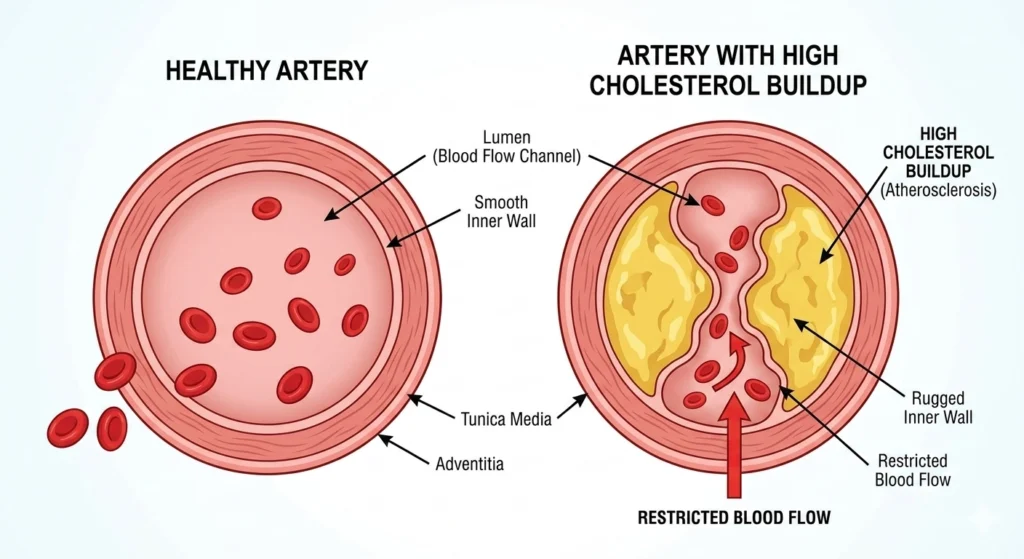
- LDL (Low-Density Lipoprotein): the 'bad cholesterol.' LDL carries cholesterol to the walls of the arteries, where it accumulates and forms plaques fatty deposits that progressively narrow and harden the arteries. This process, called atherosclerosis, is the underlying cause of most heart attacks and strokes.
- HDL (High-Density Lipoprotein) : the 'good cholesterol.' HDL carries excess cholesterol away from the arteries back to the liver, where it is processed and eliminated. Higher HDL levels are associated with a lower risk of heart disease.
Triglycerides, another type of fat in the blood, are also measured as part of a lipid profile and contribute independently to cardiovascular risk.
What Is Cholesterol and Why Does It Matter?
Cholesterol is a fatty substance produced by the liver and obtained from certain foods. It is essential for many bodily functions including hormone production and cell membrane integrity. The problem arises when certain types of cholesterol accumulate in the blood at unhealthy levels.
- Cholesterol travels through the bloodstream attached to proteins called lipoproteins. The two most important types are:
- LDL (Low-Density Lipoprotein): the 'bad cholesterol.' LDL carries cholesterol to the walls of the arteries, where it accumulates and forms plaques fatty deposits that progressively narrow and harden the arteries. This process, called atherosclerosis, is the underlying cause of most heart attacks and strokes.
- HDL (High-Density Lipoprotein) : the 'good cholesterol.' HDL carries excess cholesterol away from the arteries back to the liver, where it is processed and eliminated. Higher HDL levels are associated with a lower risk of heart disease
Triglycerides, another type of fat in the blood, are also measured as part of a lipid profile and contribute independently to cardiovascular risk.
Understanding Your Cholesterol Numbers
If further investigation is needed following your consultation, the following tests are available on-site at Sheth Heart Clinic often on the same day:
| Cholesterol Type | Optimal Level | What It Means |
|---|---|---|
|
Total Cholesterol |
Below 200 mg/dL |
Overall cholesterol in the blood |
|
LDL (Bad Cholesterol) |
Below 100 mg/dL (below 70 for high-risk) |
Primary driver of artery blockages |
|
HDL (Good Cholesterol) |
Above 40 (men) / 50 (women) mg/dL |
Protective removes cholesterol from arteries |
|
Triglycerides |
Below 150 mg/dL |
Blood fats linked to heart and metabolic risk |
|
Non-HDL Cholesterol |
Below 130 mg/dL |
Comprehensive risk marker total minus HDL |
These numbers must always be interpreted in context. A cardiologist evaluates your cholesterol levels alongside your age, blood pressure, diabetes status, smoking history, family history, and existing heart disease to determine your true cardiovascular risk and the appropriate treatment target.
What Causes High Cholesterol?
Lifestyle Factors
- A diet high in saturated fats (red meat, full-fat dairy, fried and processed foods) and trans fats
- Physical inactivity regular exercise raises HDL and lowers LDL and triglycerides
- Obesity, particularly abdominal obesity, raises LDL and triglycerides and lowers HDL
- Smoking damages blood vessel walls, lowers HDL, and accelerates plaque formation
- Excessive alcohol consumption raises triglyceride levels
Medical and Genetic Factors
- Familial hypercholesterolaemia a common inherited condition causing very high LDL from birth, significantly increasing early heart disease risk
- Diabetes raises LDL and triglycerides and damages arterial walls
- Hypothyroidism, an underactive thyroid, raises LDL cholesterol
- Chronic kidney disease impairs fat metabolism
- Certain medications including some blood pressure drugs and steroids
How Does High Cholesterol Damage the Heart?
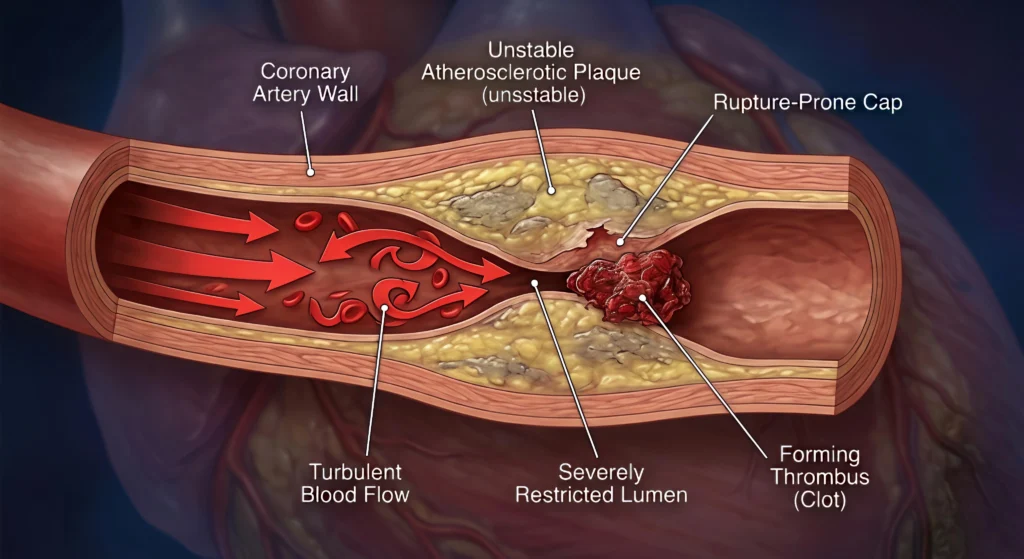
When LDL cholesterol is persistently elevated, it penetrates and accumulates in the inner walls of the coronary arteries. The immune system responds to this accumulation by triggering inflammation, which accelerates plaque growth. Over the years, plaques enlarge, harden, and progressively narrow the artery.
When a plaque ruptures suddenly, the body’s clotting response can completely block the artery, causing a heart attack. This entire process is silent. There are no warning symptoms until the damage is already done. This is why proactive assessment and treatment before symptoms develop is so critical.
Who Should Have a Cholesterol & Cardiac Risk Assessment?
- Adults above 30 years of age, particularly those with any additional risk factors
- Anyone with a family history of high cholesterol, early heart attack (before 55 in men, before 65 in women), or stroke
- Patients with diabetes or pre-diabetes
- Patients with high blood pressure (hypertension)
- Overweight or obese individuals, particularly with abdominal obesity
- Smokers or ex-smokers
- Anyone already told their cholesterol is high but who has not had a formal cardiac evaluation
- Patients currently on cholesterol medication who want to assess whether treatment is achieving adequate control
- Anyone with a personal history of heart attack, angioplasty, or bypass surgery for whom LDL targets are significantly stricter
What Does the Assessment Include?
What a Cardiac Risk Assessment at Sheth Heart Clinic Includes
- OPD Consultation : full cardiovascular risk evaluation with Dr. Kulin Sheth
- Lipid Profile Review: Expert Interpretation of Your Cholesterol Numbers in Clinical Context
- ECG: heart rhythm and electrical activity assessment
- 2D Echocardiogram with GLS :structural assessment of heart muscle, pumping function, and valves
- TMT (Treadmill Test) : stress test to detect hidden blockages, if clinically indicated
- Personalised treatment plan: diet, lifestyle, medication guidance, and follow-up schedule
Treatment: What Are the Options?
Treatment of high cholesterol is tailored to each patient’s overall cardiovascular risk, not just the number on a blood test. The approach combines lifestyle modification with medication where required.
Lifestyle Modification
- Reducing saturated fat : replacing red meat and full-fat dairy with lean protein, fish, and plant-based foods
- Increasing dietary fibre: oats, legumes, fruits, and vegetables help lower LDL
- Regular aerobic exercise: at least 150 minutes per week of moderate activity raises HDL and lowers LDL
- Weight loss: even 5 to 10% reduction significantly improves the lipid profile
- Smoking cessation: raises HDL and reduces overall cardiovascular risk
Cholesterol-Lowering Medications
For patients with mildly elevated cholesterol and low overall cardiovascular risk, lifestyle changes alone may be sufficient:
- Statins (atorvastatin, rosuvastatin) : the most widely prescribed and evidence-supported class. Statins lower LDL by reducing the liver's production of cholesterol and have a robust evidence base for reducing heart attack and stroke risk.
- Ezetimibe: reduces cholesterol absorption from the gut. Often combined with a statin when statin therapy alone is insufficient to reach target LDL.
- Bempedoic Acid: a newer oral medication that lowers LDL by a different mechanism to statins, working upstream in the cholesterol synthesis pathway. Particularly useful for patients who are statin-intolerant (those who experience muscle aches on statins) or who require additional LDL lowering beyond what statins and ezetimibe can achieve. It can be used alone or in combination with ezetimibe.
- PCSK9 Inhibitors: injectable medications that dramatically lower LDL. Used in patients with very high-risk cardiovascular disease or familial hypercholesterolaemia who cannot reach target LDL with oral medications alone. Highly effective, with strong outcome data from large clinical trials.
- Fibrates and Omega-3 fatty acids: used primarily to lower elevated triglyceride levels.
Cholesterol-Lowering Medications
At Sheth Heart Clinic, a cholesterol and cardiac risk assessment goes well beyond a simple blood test review. Dr. Kulin Sheth evaluates your lipid profile in the context of a full clinical consultation, combining it with on-site diagnostic tests where appropriate:
| Risk Category | LDL Target |
|---|---|
|
Low risk |
Below 116 mg/dL |
|
Moderate risk |
Below 100 mg/dL |
|
High risk (diabetes, hypertension, multiple risk factors) |
Below 70 mg/dL |
|
Very high risk (established heart disease, previous heart attack, angioplasty, or bypass) |
Below 55 mg/dL |
Cholesterol Management Is a Long-Term Commitment
High cholesterol is a chronic condition requiring long-term management. Regular follow-up is essential to monitor whether treatment is achieving the target LDL, to adjust medications if needed, and to reassess cardiovascular risk as it evolves.
At Sheth Heart Clinic, Dr. Kulin Sheth provides ongoing, personalised cholesterol management as part of a broader cardiovascular risk reduction strategy, helping patients achieve and maintain their target numbers over the long term.
Dr. Kulin Sheth's Approach
Dr. Sheth is known for a calm, thorough, and patient-centred consultation style. He takes time to listen, never rushes through an appointment, and explains findings clearly so that patients leave with a genuine understanding of their heart health and what needs to be done, if anything.
Patients also appreciate that Dr. Sheth only recommends investigations that are genuinely needed. There are no unnecessary tests, no unnecessary procedures, and no unnecessary alarm.

Sheth Heart Clinic - Dr Kulin Sheth
- +91 9725551563
- 818, 8th Floor, Anam 2, Besides Vakil Sahib Bridge, Next to Amprapali Axiom, Bopal Ambli T Juntion, Bopal, Ahmedabad 380058
- OPD Consultation, ECG, 2D Echo with GLS, TMT, Routine Cardiac Follow-ups
- Mon - Sat : 9:30 AM–12 pm, 6–8:30 PM
Know Your Numbers. Protect Your Heart.
Book a Cholesterol & Cardiac Risk Assessment with Dr. Kulin Sheth.
Call or WhatsApp: +91 9725551563 | Sheth Heart Clinic, Bopal, Ahmedabad
FAQs
At Sheth Heart Clinic, Dr. Kulin Sheth provides personalized, evidence-based lipid-lowering therapies tailored to individual cardiovascular risk profiles. Treatments range from advanced medical therapies—including high-potency statins, ezetimibe, and cutting-edge PCSK9 inhibitors for resistant cases—to structured lifestyle modification counseling. The focus is on achieving target Low-Density Lipoprotein (LDL) levels to prevent plaque buildup and future cardiac events.
Mildly elevated cholesterol levels with low overall cardiovascular risk may initially be managed through strict dietary changes, weight management, and aerobic exercise. However, if you have high-risk factors like a history of heart attack, existing coronary blockages, diabetes, or severe genetic hypercholesterolemia, lifestyle changes alone are often insufficient. Dr. Kulin Sheth evaluates your specific risk score to determine if lipid-lowering medications are required to protect your heart.
While standard lab reports list generalized normal ranges, ideal targets are highly individualized. For individuals with established coronary artery disease or high cardiovascular risk, clinical guidelines recommend driving LDL (“bad”) cholesterol significantly lower—often below 55 mg/dL or 70 mg/dL. Dr. Kulin Sheth analyzes your complete lipid profile (Total Cholesterol, LDL, HDL, and Triglycerides) alongside your personal health history to establish and monitor your precise target numbers.
When starting a new high cholesterol treatment or adjusting medication dosages, a follow-up lipid profile test is typically recommended within 4 to 12 weeks to assess efficacy and safety. Once your target cholesterol levels are stabilized, routine monitoring is generally conducted every 6 to 12 months, or as advised by Dr. Kulin Sheth during your clinic consultations in Bopal, Ahmedabad.
High cholesterol is the primary driver of atherosclerosis (plaque formation in the heart arteries). As an experienced interventional cardiologist in Ahmedabad, Dr. Kulin Sheth does not just treat numbers on a lab report; he evaluates how your cholesterol levels actively impact your arterial health. This comprehensive approach ensures timely screening for silent blockages and helps prevent acute myocardial infarctions (heart attacks) or stroke.